Instruct course on Virtual Drug Screening (VDS). Madrid, November 10 – 12, 2026

Venue

National Center for Biotechnology (CNB), Madrid, Spain
Madrid, 10 – 12 November, 2026

Contact Us – I2PC – Instruct Image Processing Center

Overall Aims and Course Outline

Virtual Drug Screening (VDS) stands for the computational processes and workflows that allows for the prediction of a set of molecules that are most likely going to modulate a disease or condition. These predictions are just the first step in the drug development process, but VDS aims to reduce the computational and time costs involved in the development of a new drug, which are usually quite high. This course provides an overview of the most commonly used workflows for VDS in Scipion. The participants will learn the fundaments of each of the steps generally used in this kind of pipelines and will take a peek on the analysis performed to study the results.

We will use the Scipion platform, integrating tools such as AutoDock, P2Rank and OpenMM, plus in-house scripts that perform useful tasks during the process.

The course will be held in-person and is designed for researchers at any stage of their career who are interested in incorporating VDS and Drug Discovery into their research.

Motivation for the Instruct Course on Virtual Drug Screening 

The goal is to introduce researchers to molecular screening analysis, one of the pivot and early steps in the drug discovery process. The course will cover the theory behind the most commonly used methods in the field and include hands-on practical sessions within the Scipion-chem environment, facilitating the use of multiple tools within a single workflow.

Expected Impact for Young Researchers

This course will equip young researchers with the knowledge and skills necessary to apply VDS in the study of druggability for their proteins of interest. Through training in these pipelines and the interpretation of their results, participants will be able to address the first steps of a drug discovery process, such as the search of inhibitors for an enzyme of interest.


Contacts

Lead contact:
Carlos Oscar Sorzano
email: coss@cnb.csic.es

Administrative Contact:
Blanca Benitez
email: blanca@cnb.csic.es

Tutors

Daniel Del Hoyo (DH) – PhD student, Scipion-chem head developer, BCU
Blanca Pueche (BP) – PhD student, Scipion-chem developer, BCU
Joaquín Algorta (JA) –  PhD student, Scipion-chem developer, BCU
Judith Maestro (JM) – Scipion-chem developer, BCU
Laura Pérez (LP) – Scipion-chem developer, BCU
Carlos Oscar Sorzano (COS) – Group leader, BCU; Technical Director, I2PC.

Registration Fee

  • Academic Registration Fee Instruct countries: Predocs & Postdosc 50€
  • Academic Registration Fee Instruct countries: Others 100€
  • Academic Registration Fee Non Instruct countries: Predocs & Postdosc 100€
  • Academic Registration Fee Non Instruct countries: Others 150€
  • Industrial Registration Fee 300€

ACOMMODATIONS

Additionally, on our campus, there is a student residence that might have rooms available for those dates. Here are the links:

Residencia UAM: https://resa.es/residencias/madrid/erasmo/

Agenda

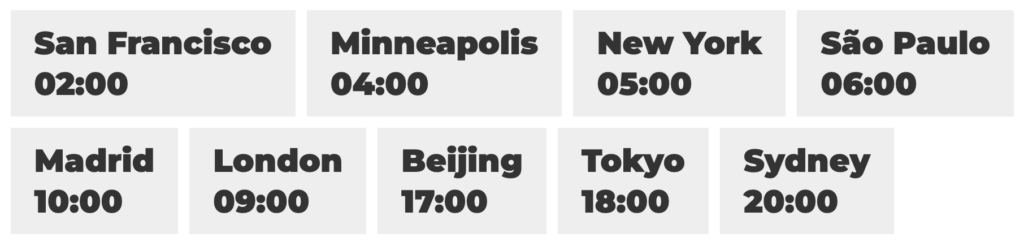
 Times are expressed in CET time Zone

DAY 1: 

10:00 – 10:30: Introduction Virtual Drug Screening (DH)

10:30 – 11:00: Introduction to Scipion (DH)

11:00 – 11:30: Coffee break

11:30 – 13:00: Simple Virtual Drug Screening (DH)

13:00 – 14:00: Lunch break

14:00 – 16:00: Selective VDS (DH)

16:00 – 16:30: Coffee break

16:30 – 17:30: Ligand Filtering (BP)

17:30 – 17:45: End of the day

DAY 2: 

09:30 – 10:00: Review from the previous day (DH)

10:00 – 11:00: Ligand Filtering (BP)

11:00 – 11:30: Coffee break

11:30 – 13:00: High-throughput screening (BP)

13:00 – 14:00: Lunch break

14:00 – 15:00: Flexible Docking (JA)

15:00 – 16:00: Lead Optimization (JA)

16:00 – 16:30: Coffee break

16:30 – 17:30: Molecular Dynamics (JA)

17:30 – 17:45: End of the day

DAY 3: 

09:30 – 10:00: Review from the previous day (DH)

10:00 – 11:00:  Molecular Dynamics (JA)

11:00 – 11:30: Coffee break

11:30 – 13:00: Atomic Modelling (BP)

13:00 – 14:00: Lunch break

14:00 – 16:00: Protein-Protein Interactions (JM)

16:00 – 16:30: Coffee break

16:30 – 17:30: One-to-one meetings between interested participants and course tutors.

17:30 – 17:45: Closing remarks and end of the course.

I2PC Course on Single Particle analysis and modelling by Cryo-EM. Madrid, June 22nd to 26th, 2026

Venue

Madrid´s Institute for Material Sciences (ICMM-CSIC), Madrid, Spain
Madrid, June 22nd – 26th, 2026

How to find us: Contact | ICMM

Overall Aims and Course Outline

Cryo-Electron Microscopy (Cryo-EM) allows the determination of three-dimensional structures of biological macromolecules at atomic resolution. This course provides an overview of image processing in Single Particle Analysis (SPA) using Scipion. In the first part of the course, participants will learn the fundamentals of reconstructing biological structures from single particle images obtained through cryo-EM, employing state-of-the-art software in the field.

The second part of the course will focus on interpreting reconstructed maps through atomic modeling. We will use the Scipion platform, integrating tools such as Coot, Chimera, Refmac, and AlphaFold. This course is open to researchers of all levels.

The course will be held in-person and is designed for researchers at any stage of their career who are interested in incorporating Cryo-EM into their research.


Expected Impact for Young Researchers
This course will equip young researchers with the knowledge and skills necessary to apply Cryo-EM in the study of biological macromolecules. Through training in image processing and the interpretation of reconstructed maps, participants will be able to address the structural characterization of biomolecules. These approaches will enhance the understanding of molecular mechanisms and facilitate the use of Cryo-EM as a tool in biomedical and biotechnological research.

Tutors

Marcos Gragera(MG) – Single Particle Analysis specialist, BCU/I2PC
Marta Martinez (MM) – Modelling specialist, BCU/I2PC
Roberto Marabini (RM) – Professor, UAM, Collaborator BCU/I2PC
Deborah Cezar Mendonca – Biologie structurale intégrative, BCU/I2PC

Registration Fee

  • Academic Registration Fee Instruct countries: Predocs & Postdosc 50€
  • Academic Registration Fee Instruct countries: Others 100€
  • Academic Registration Fee Non Instruct countries: Predocs & Postdosc 100€
  • Academic Registration Fee Non Instruct countries: Others 150€
  • Industrial Registration Fee 300€

Acommodations

Additionally, on our campus, there is a student residence that might have rooms available for those dates. Here are the links:

Residencia UAM: https://resa.es/residencias/madrid/erasmo/

Online registration will close on 31 May 2026 at 12:00 PM

Day 1

10:30 – 11:00

Badge Pick-up & Welcome

11:00 – 13:00

Movie alignment, screening Movie alignment, CTF estimation and micrograph curation

13:00 – 14:00

Lunch Break

14:00 – 16:00

Strategies for particle picking

16:00 – 16:30

Coffee break

16:30 – 17:30

2D classification

17:30

End of day

Day 2

09:30 – 11:00        

Initial volume & 3D classification

11:00 – 11:30

Coffee break

11:30 – 13:00

3D Refinement

13:00 – 14:00

Lunch Break

14:00 – 16:00

Advaced methods for 3D classification & Refinement (I)

16:00 – 16:30

Coffee break

16:30 – 17:30

Advaced methods for 3D classification & Refinement (II)

17:30

End of day

Day 3

09:30 – 11:00                   

Postprocessing: Sharpening, local resolution, anisotropy assessment and validation metrics (I)

11:00 – 11:30

Coffee break

11:30 – 13:00

Postprocessing: Sharpening, local resolution, anisotropy assessment and validation metrics (II)

13:00 – 14:00

Lunch Break

14:00 – 16:00

Asymmetric features and symmetry expansion.

16:00 – 16:30

Coffee break

16:30 – 17:30

Asymmetric features and localized reconstruction.

Day 4

09:30 – 10:15       

Introduction to model building in cryo-EM

10:15 – 11:00

Getting the initial model (homology, AlphaFold and ModelAngelo)

11:00 – 11:30

Coffee break

11:30 – 12:00

Structure analysis: Structure comparison

12:00 – 13:00

Rigid fitting; Introduction to flexible fitting (Coot)

13:00 – 14:00

Lunch Break

14:00 – 16:00

Flexible fitting (Phenix & Refmac) and Validation & Review Kahoot

16:00 – 16:30

Coffee break

16:30 – 17:30

Model building of an alternative structure

Day 5

09:30 – 09:45                     

Presentation of course questionnaire

09:45 – 11:00

Building the model of the whole protein

11:00 – 11:30

Coffee break

11:30 – 12:00

Submission of maps and structures to EMDB

12:00 – 12:30

Structure analysis: chain contacts

12:30 – 13:00

Structural search

13:00

Lunch Break and end of the day

Instruct course on flexibility analysis using Scipion. Madrid, April 06 – 10, 2026

Venue

National Center for Biotechnology (CNB), Madrid, Spain
Madrid, April 06 – 10, 2026

Contact Us – I2PC – Instruct Image Processing Center

Overall Aims and Course Outline
Cryo-Electron Microscopy (CryoEM) has become a well-established technique for determining the three-dimensional structures of biological macromolecules. It currently achieves atomic resolution and enables the study of conformationally heterogeneous samples as well as macromolecular complexes. CryoEM complements other structural techniques such as X-ray crystallography and Nuclear Magnetic Resonance and is currently the fastest-growing technique in atomic structure depositions in public databases like the PDB.

The aim of this course is to introduce participants to the analysis of conformational flexibility/heterogeneity, a crucial step in CryoEM image processing to obtain dynamic information in the form of conformational landscapes. The I2PC has extensive experience in organizing courses on this topic, with previous editions being in high demand.

This course is intended for researchers at all levels.

Motivation for the I2PC Course on Conformational and Compositional Heterogeneity
The goal is to introduce researchers to flexibility/heterogeneity analysis, one of the most advanced areas in Single Particle Analysis (SPA). The course will cover the theory behind the most commonly used methods in the field and include hands-on practical sessions within the Scipion Flexibility Hub environment, facilitating the use of multiple tools within a single workflow.

Expected Impact for Young Researchers
Flexibility analysis in CryoEM is an emerging technique that enables the capture of different conformations of studied macromolecules. Gaining expertise in this area provides an added value for researchers with prior experience in CryoEM image processing, enhancing their analytical capabilities and understanding of the structural dynamics of biomolecules.


Contacts

Lead contact:
Carlos Oscar Sorzano
email: coss@cnb.csic.es

Administrative Contact:
Blanca Benitez
email: blanca@cnb.csic.es

Tutors

Marcos Gragera(MG) – Single Particle Analysis specialist, BCU/I2PC
David Herreros (DH) – Flexibility Hub head developer, BCU
Carlos Oscar Sorzano (COS) – Group leader, BCU; Technical Director, I2PC.
Eduardo Garcia (EG)-  PhD student, BCU
Maximilian Zoech (MZ) – PhD student, BCU

Registration Fee

  • Academic Registration Fee Instruct countries: Predocs & Postdosc 50€
  • Academic Registration Fee Instruct countries: Others 100€
  • Academic Registration Fee Non Instruct countries: Predocs & Postdosc 100€
  • Academic Registration Fee Non Instruct countries: Others 150€
  • Industrial Registration Fee 300€

ACOMMODATIONS

Additionally, on our campus, there is a student residence that might have rooms available for those dates. Here are the links:

Residencia UAM: https://resa.es/residencias/madrid/erasmo/

Agenda

 Times are expressed in CET time Zone

DAY 1: 

14:00 – 14:45: Introduction to Scipion and flexibility in CryoEM (DH)
14:45 – 15:30: Preparing the project, importing the data, and how to work with Scipion (DH)
15:30 – 16:00: HetSIREN (Theory) (DH)
16:00 – 16:30: Coffee break
16:30 – 17:30: HetSIREN (Practice) (DH)
17:30 – 17:45: End of the day

DAY 2: 

09:30 – 10:00: Review from the previous day
10:00 – 11:00: Landscape exploration: interactive tools (DH)
11:00 – 11:30: Coffee break
11:30 – 12:30: Landscape exploration: interactive tools (DH)
12:30 – 13:00: Zernike3D (Theory)
13:00 – 14:00: Lunch break
14:00 – 15:00: Zernike3D (Practice)
15:00 – 15:30: ZART and flexible refinement (Theory) (DH)
15:30 – 16:00: ZART (Practice) (DH)
16:00 – 16:30: Coffee break
16:30 – 17:00: ZART (Practice)
17:00 – 17:15: End of the day

DAY 3: 

09:30 – 10:00: Review from the previous day
10:00 – 10:30: CryoDRGN (Theory) (MZ)
10:30 – 11:00: CryoDRGN (Practice) (MZ)
11:00 – 11:30: Coffee break
11:30 – 12:00: CryoDRGN (Practice) (MZ)
12:00 – 12:30: OpusDSD (Theory) (EG)
12:30 – 13:00: OpusDSD (Practice) (EG)
13:00 – 14:00: Lunch break
14:00 – 14:30: OpusDSD (Practice) (EG)
14:30 – 15:00: 3DVA (Theory) (G)
15:00 – 16:00: 3DVA (Practice) (MG)
16:00 – 16:30: Coffee break
16:30 – 17:00: How to interpret machine learning results (MZ)
17:00 – 17:15: End of the day

DAY 4: 

09:30 – 10:00: Review from the previous day
10:00 – 10:30: 3DFlex (Theory) (EG)
10:30 – 11:00: 3DFlex (Practice) (MG)
11:00 – 11:30: Coffee break
11:30 – 12:00: 3DFlex (Practice) (MG)
12:00 – 12:30: Dynamight (Theory) (MZ)
12:30 – 13:00: Dynamight (Practice) (MG)
13:00 – 14:00: Lunch break
14:00 – 14:30: Dynamight (Practice) (MG)
14:30 – 15:00: FlexConsensus (Theory) (DH)
15:00 – 16:00: FlexConsensus (Practice) (DH)
16:00 – 16:30: Coffee break
16:30 – 17:00: Open questions, limitations, frontiers in flexibility (DH)
17:00 – 17:15: End of the day

DAY 5:     

09:30 – 10:00: Review from the previous day.
10:00 – 10:30: An overview of Instruct services and Flexibility Hub (MG)
10:30 – 11:00: Hands-on on real data examples/One-to-one meetings between interested participants and course tutors.
11:00 – 11:30: Coffe break
11:30 – 13:00: Hands-on on real data examples/One-to-one meetings between interested participants and course tutors.
13:00 – 14:00: Lunch break
14:00 – 14:30: Hands-on on real data examples/One-to-one meetings. between interested participants and course tutors.
14:30 – 15:00: Closing remarks and end of the course.